In a hot, airless little room in Bulawayo, an elderly man rummages through disintegrating brown envelopes and rusty files. Faint labels carry captions such as: ‘Railway Staff 1932-33’ and ‘Wages March 1952’. There are dusty black and white photographs on the wall of men in dark suits and hats. Unsmiling, they all look alarmingly similar with their handle-bar moustaches and their arms crossed resolutely across their chests. ‘No. I thought I might have something, but no.’ He reluctantly admits defeat, so convinced was he that he might be able to help me in my search. I am in the archives of the Railway Museum in Bulawayo. The buildings themselves are run down and we are surrounded by the great hulks of rusting train carcasses. The museum, now a separate entity from the National Railways of Zimbabwe, is run by a couple of train enthusiasts, who are extremely kn...
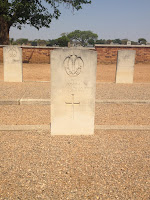
It is a hot, dusty day in early November. Splashes of red, orange and pink bougainvillea line the road, like fireworks frozen against the vast blue sky. Lady Stanley cemetery sprawls itself out as far as the eye can see: order has given way to expediency and every available space is taken. Wreaths of fake flowers in garish colours spell out names; shiny foil ribbons flicker in the sunlight or wave limply in a stray wind. A minibus emblazoned with the words ‘Exodus Funeral Services’ bounces manically down a narrow road separating the Muslim part of the cemetery from the rest and, in the distance, a blue and white striped gazebo marks a current internment. The war graves are relatively easy to find, being enclosed by a low wall and demarcated by neat white lines of headstones, standing straight and tall. The heat beats down on me as I read the inscriptions: Labourer, Cepha...
Happy that my article on the beautiful Matopos huts made the front cover of the latest edition of Nzira. Thank you to Pathisa Nyathi for his invaluable help with the research.



Comments
Post a Comment